


I’m not much of a banana person (unless it’s cooked in rum and butter, though that combo will make anything taste divine), but I loved having banana trees around when I used to live in zone 10b.
Among the many trees that grew in my Southern California garden years ago, there was an abundance of bananas flourishing year-round, all in different stages of ripeness.
A few of them even grew over my hammocks and infused such a balmy and tropical feel to the setting, it was easy to forget that we lived in the city with foghorns blowing from the Port of Los Angeles every day.
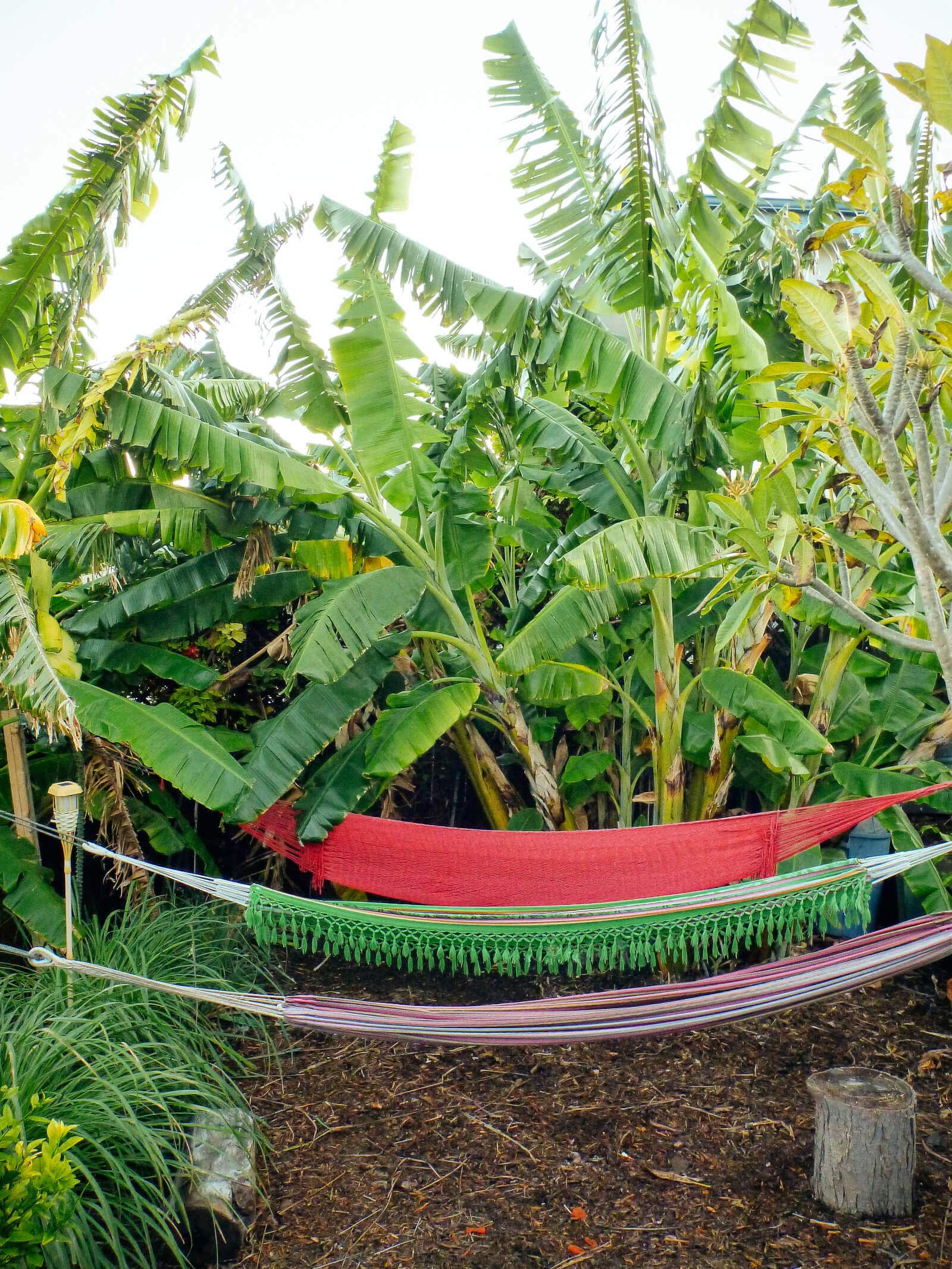
Even though I call them “trees,” they’re actually plants—and to be more specific, banana plants are herbaceous perennials.
In other words, herbs.
They’re one of those things in life that aren’t what they seem to be, the way tomatoes are technically fruits (not vegetables) and dandelions are herbs (not weeds).
In the case of bananas, they’re a fruit… but not a fruit.
Befuddled? Let me explain.
Bizarre botanical fact #1: A banana is an herb.
That’s right—a banana plant is technically a large herb, distantly related to another garden rhizome, ginger.
While most people think of basil, parsley, or rosemary when they think of herbs, it’s easier to see how a banana can be an herb if we look at more “exotic” herbs like lemongrass, horseradish, and wasabi.
Related: More perennial herbs you should grow in your garden
A banana is considered an herb in botanical terms because it never forms a woody stem (or trunk) the way a tree does. Rather, it forms a succulent stalk, or pseudostem.
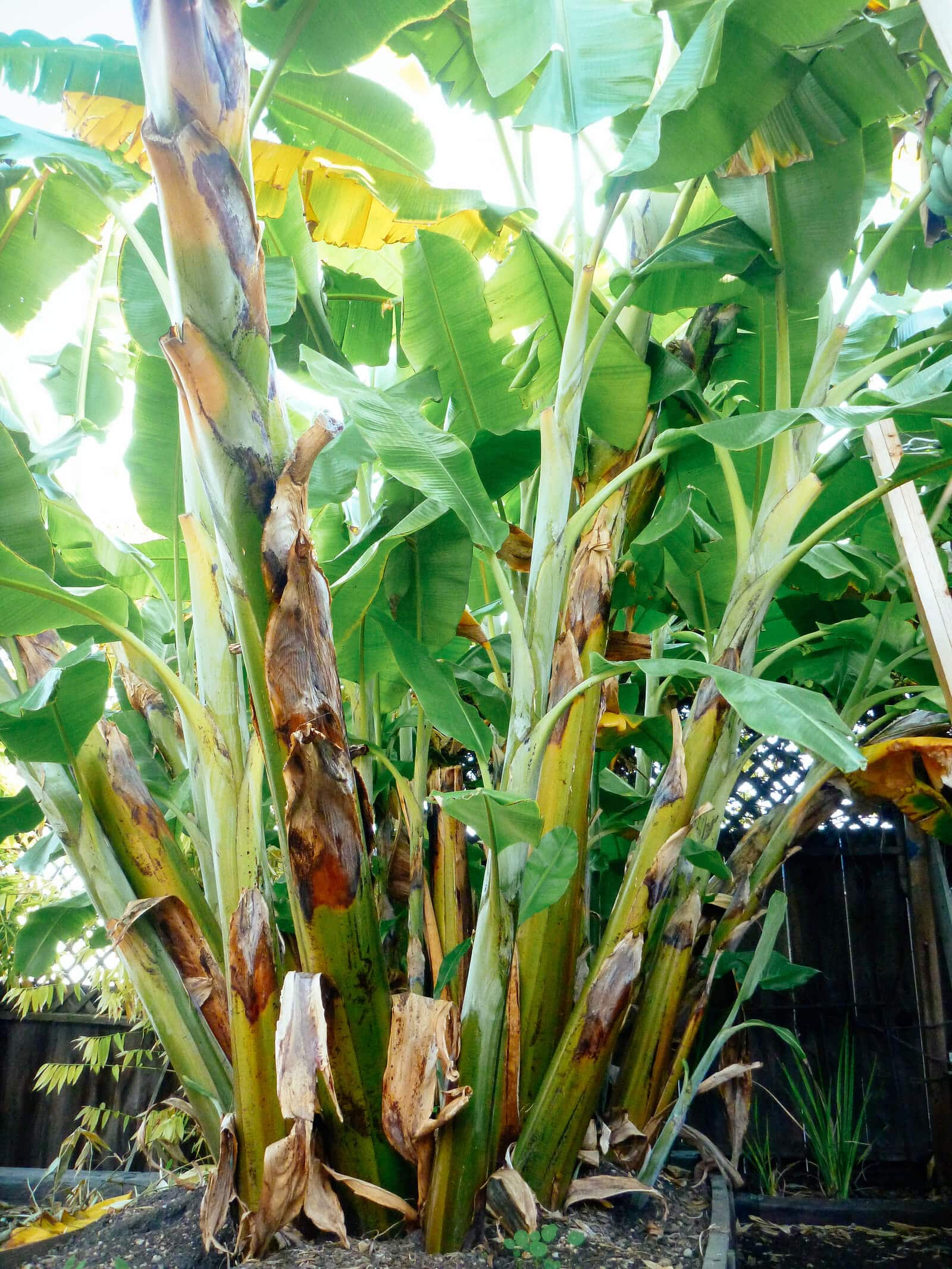
The pseudostem begins as a small shoot from an underground rhizome called a corm. It grows upward as a single stalk with a tight spiral of leaf sheaths wrapped around it. Banana leaves are simply extensions of the sheaths.
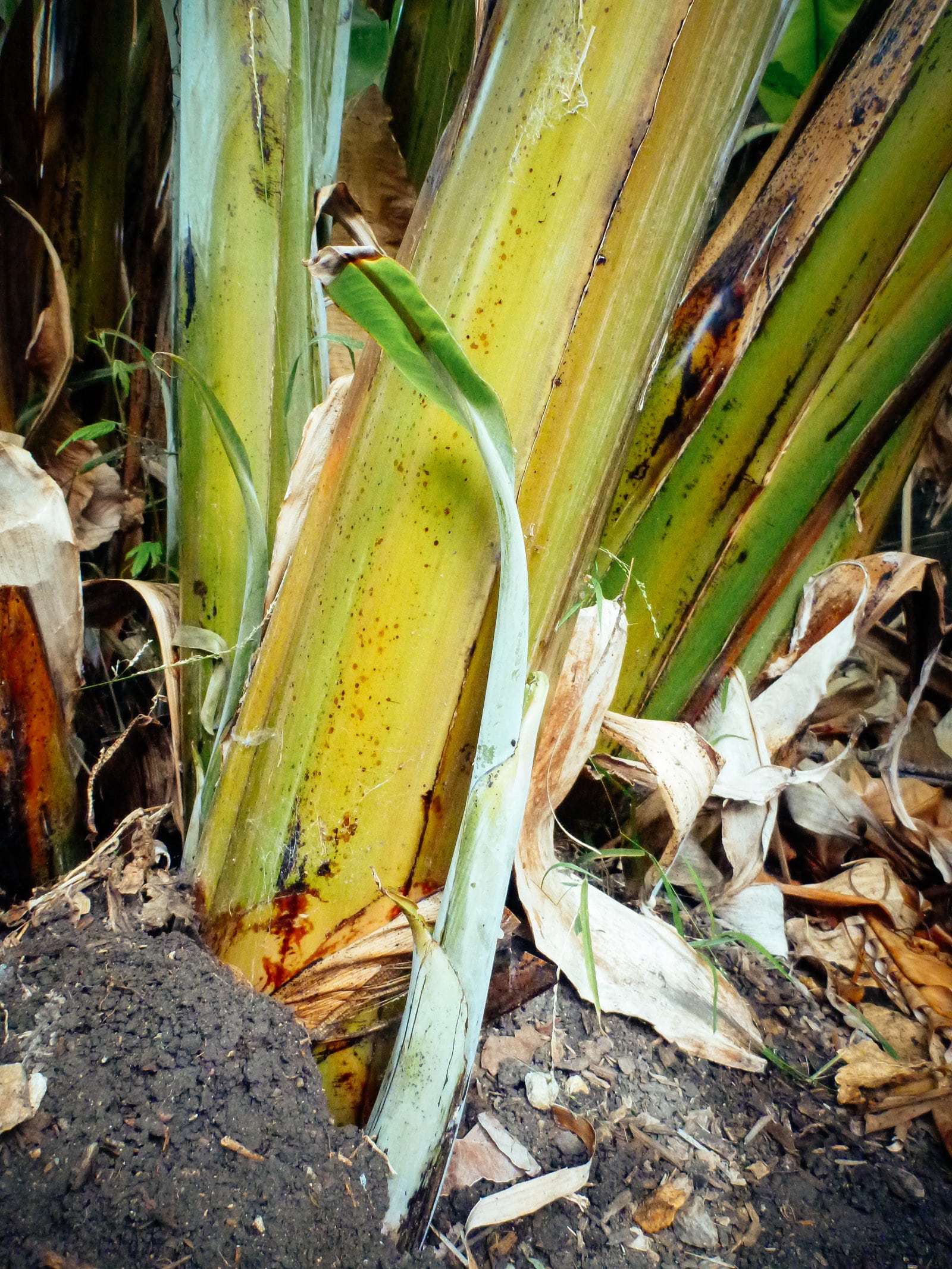
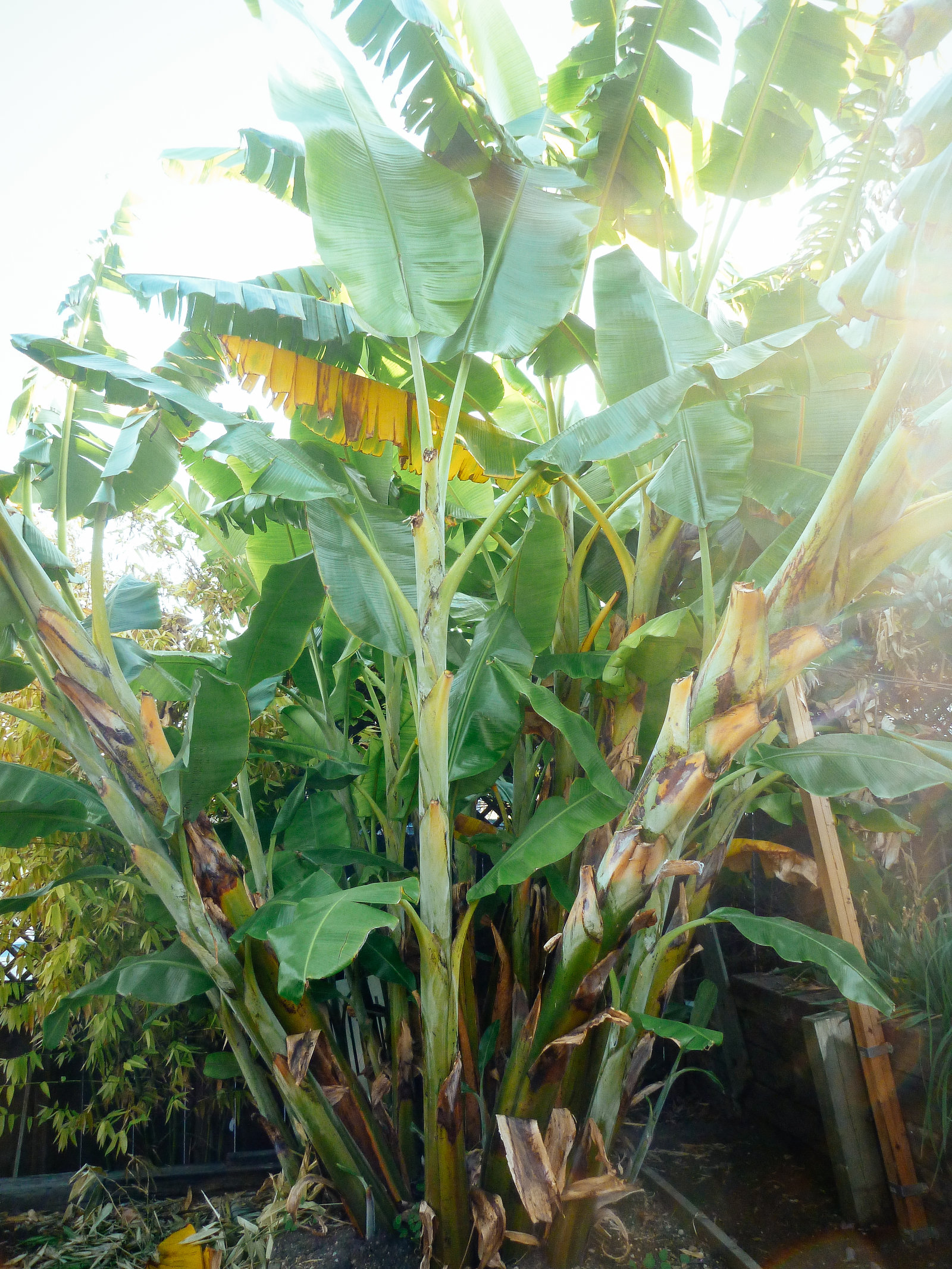
As the pseudostem grows, these leaves unfurl and fan out at the top. They’re fragile for their size and shred easily, resulting in the feathery fronds we usually associate with banana palms.
(And to quash that misnomer, bananas are not related to palm trees either.)
Over the course of a year, the stalk gradually pushes its way out from the center of the pseudostem and terminates in a large, flowering, fruit-bearing bud called an inflorescence.
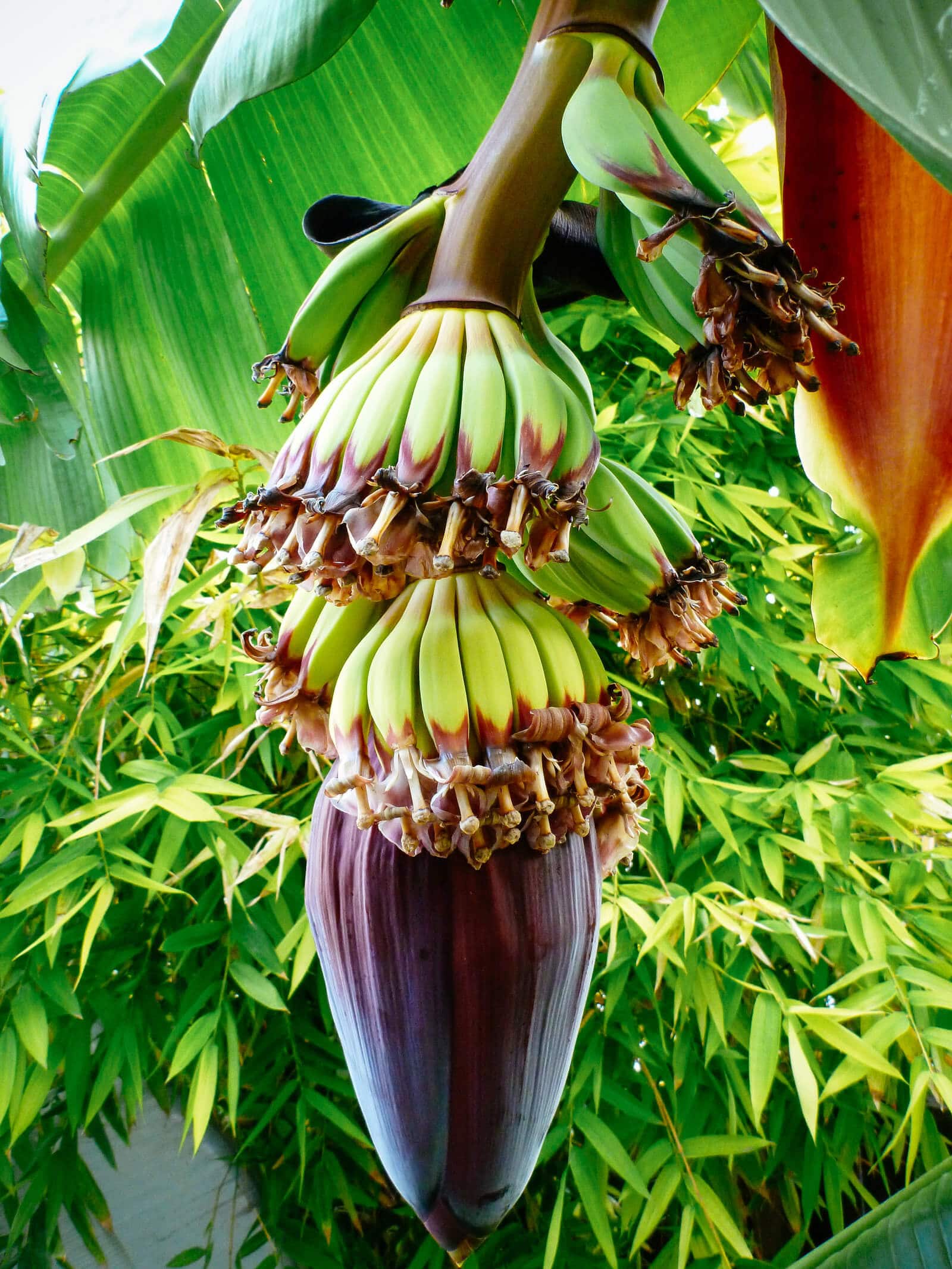
After fruiting, the pseudostem dies to the ground but the corm remains active with new points of growth.
Several shoots (or pups) emerge from the base of the old pseudostem and become new plants that also flower, fruit, die, and spur the next set of shoots.
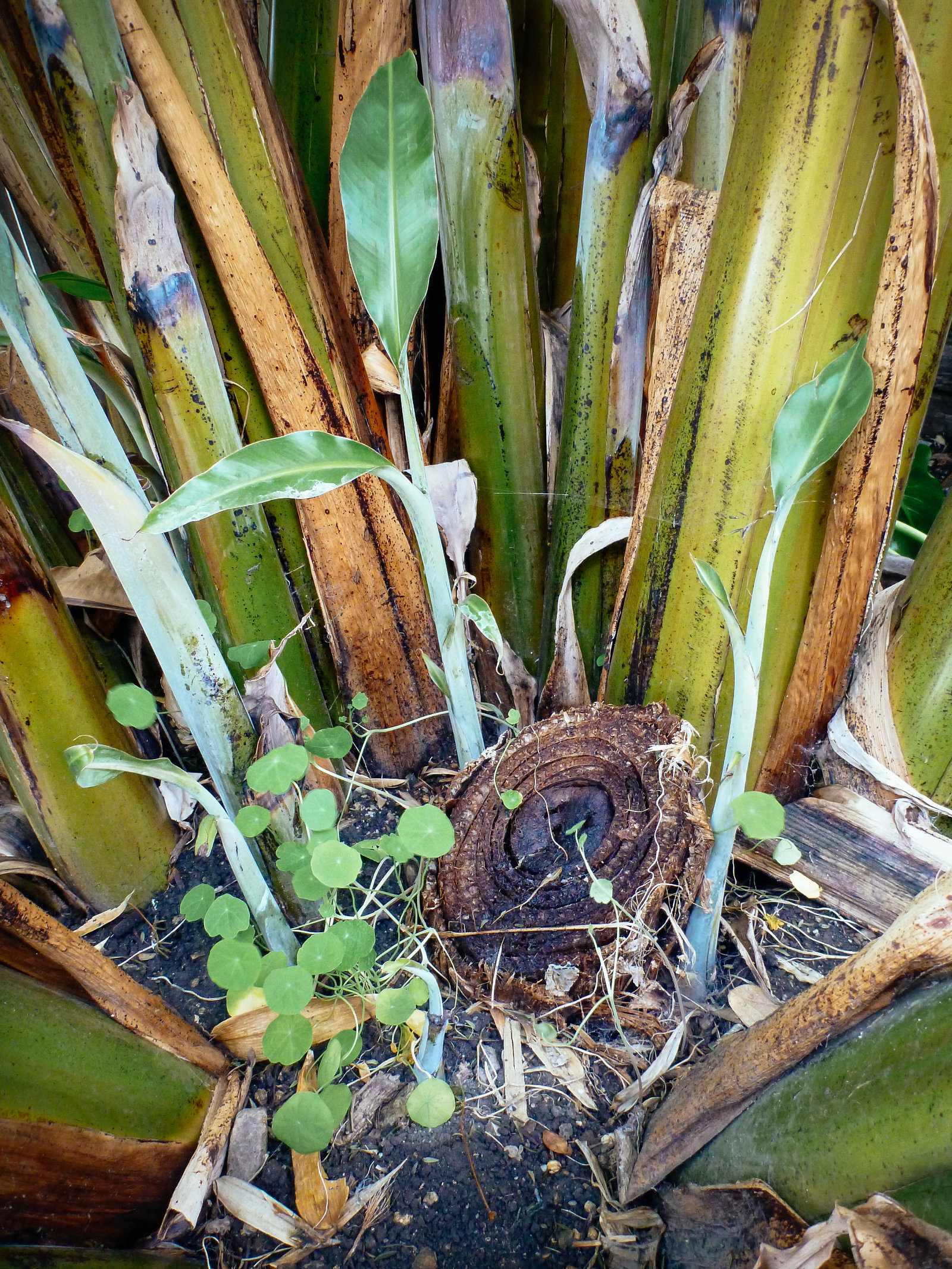
This constant process produces many generations of shoots and a single corm can have a productive lifespan of decades.
If you never remove or transplant the shoots, they end up growing in clusters and give the appearance of a large, mature tree.
Bizarre botanical fact #2: A banana is also a berry.
During the flowering stage, an inflorescence (also called a banana heart, as it emerges from the heart of the plant) appears on the end of the stem. It is usually a long, tapered, tightly wrapped, deep purple bud.
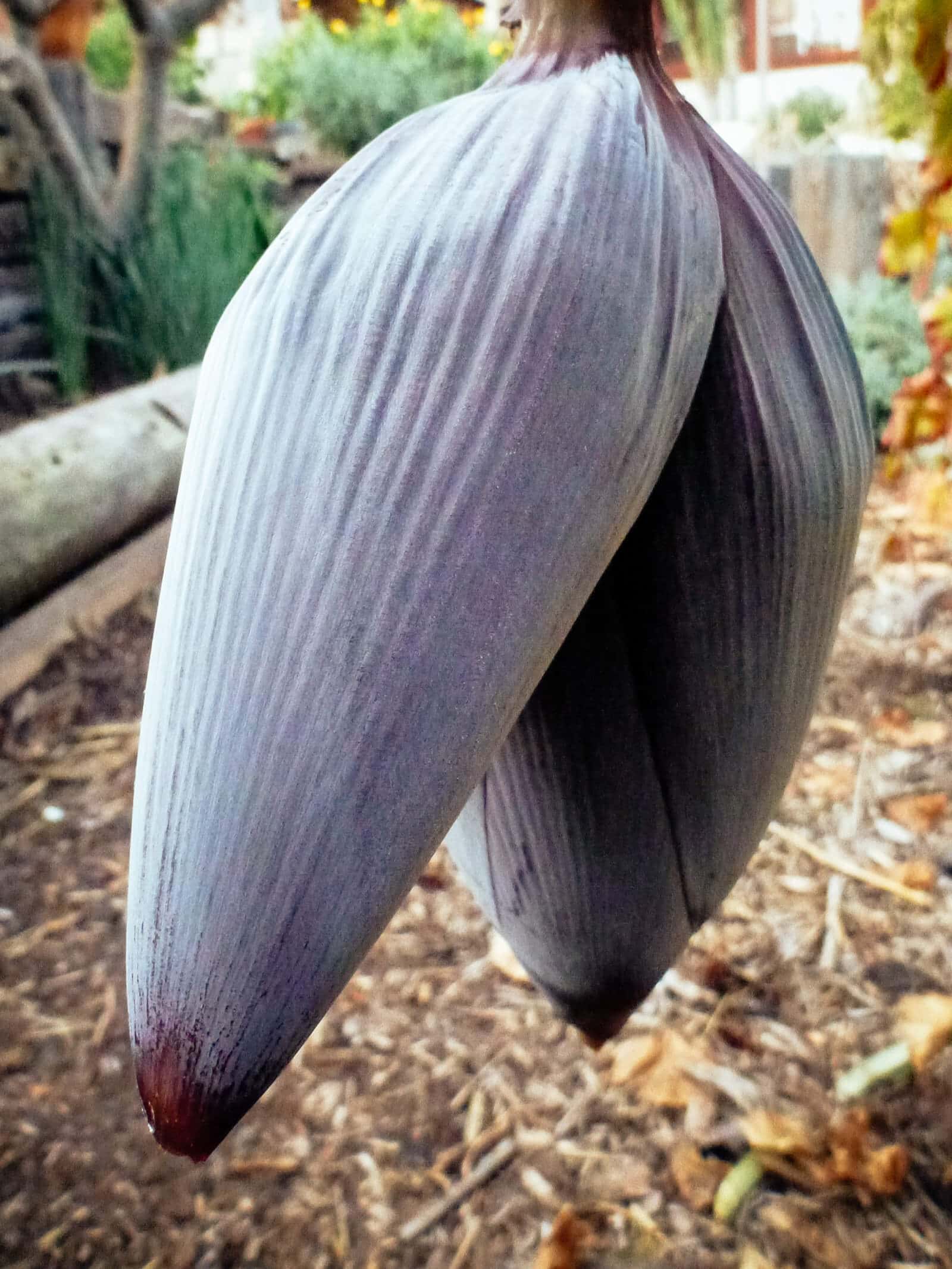
(You can eat banana flowers, by the way. They’re a staple in Chinese and Vietnamese cuisines and commonly found in the produce aisles of those markets in the United States.)
Read more: You grow these unusual vegetables and probably didn’t know you could eat them
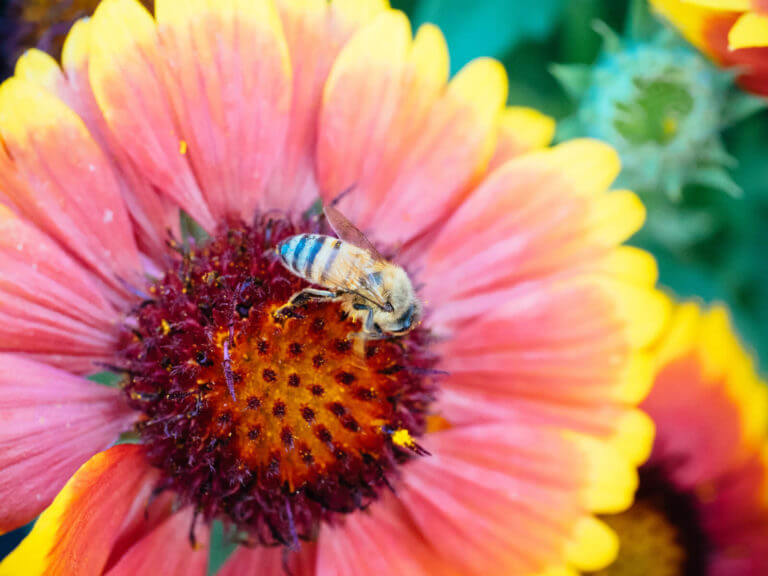
As the petal-like bracts on the bud begin to open one by one, they reveal double rows of nectar-rich blossoms. As you can imagine, the bees went wild over our banana blossoms and hummingbirds, which love tubular-shaped flowers, made frequent visits throughout the day.
Related: The only hummingbird food recipe you need for your feeder
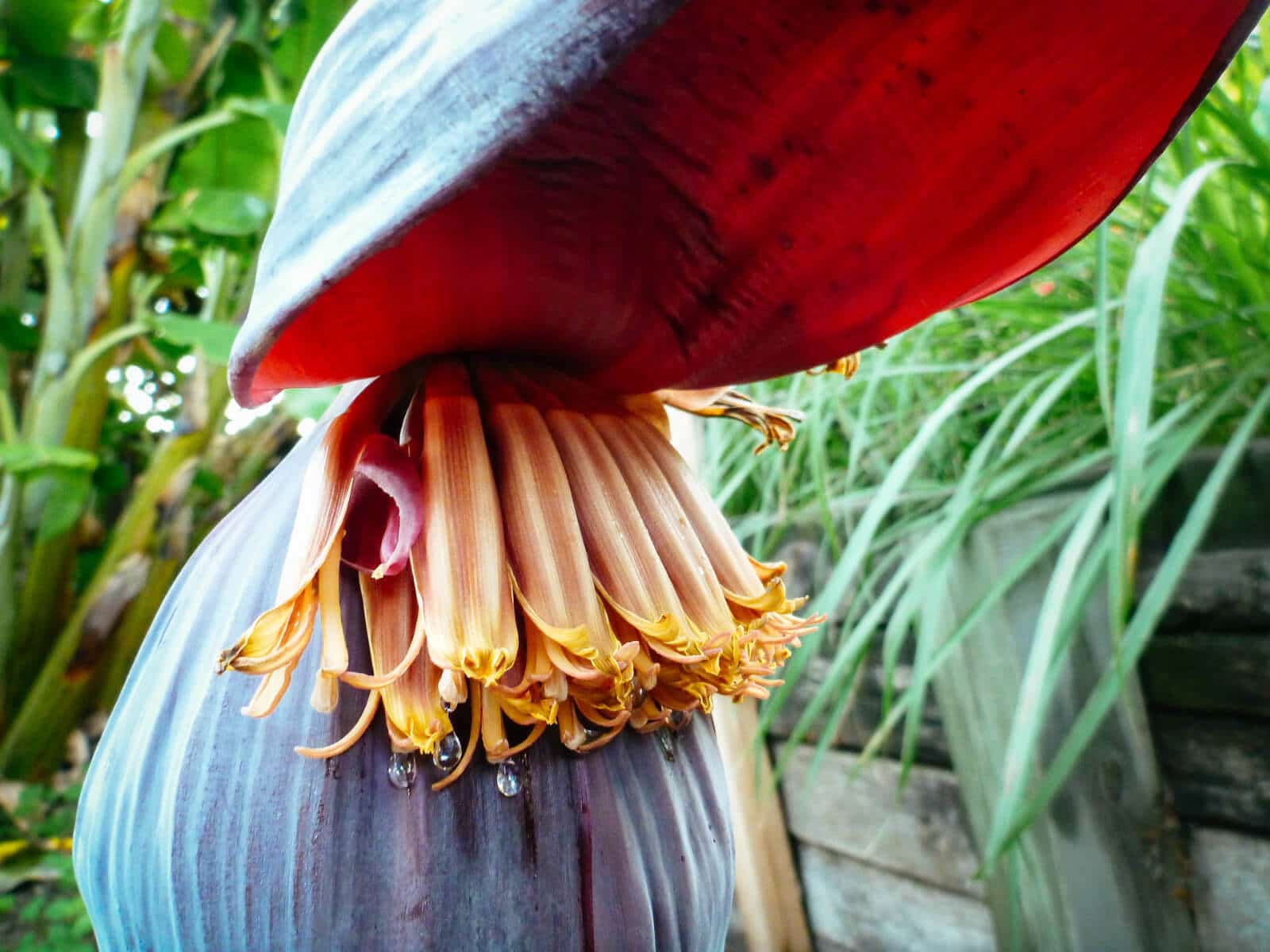
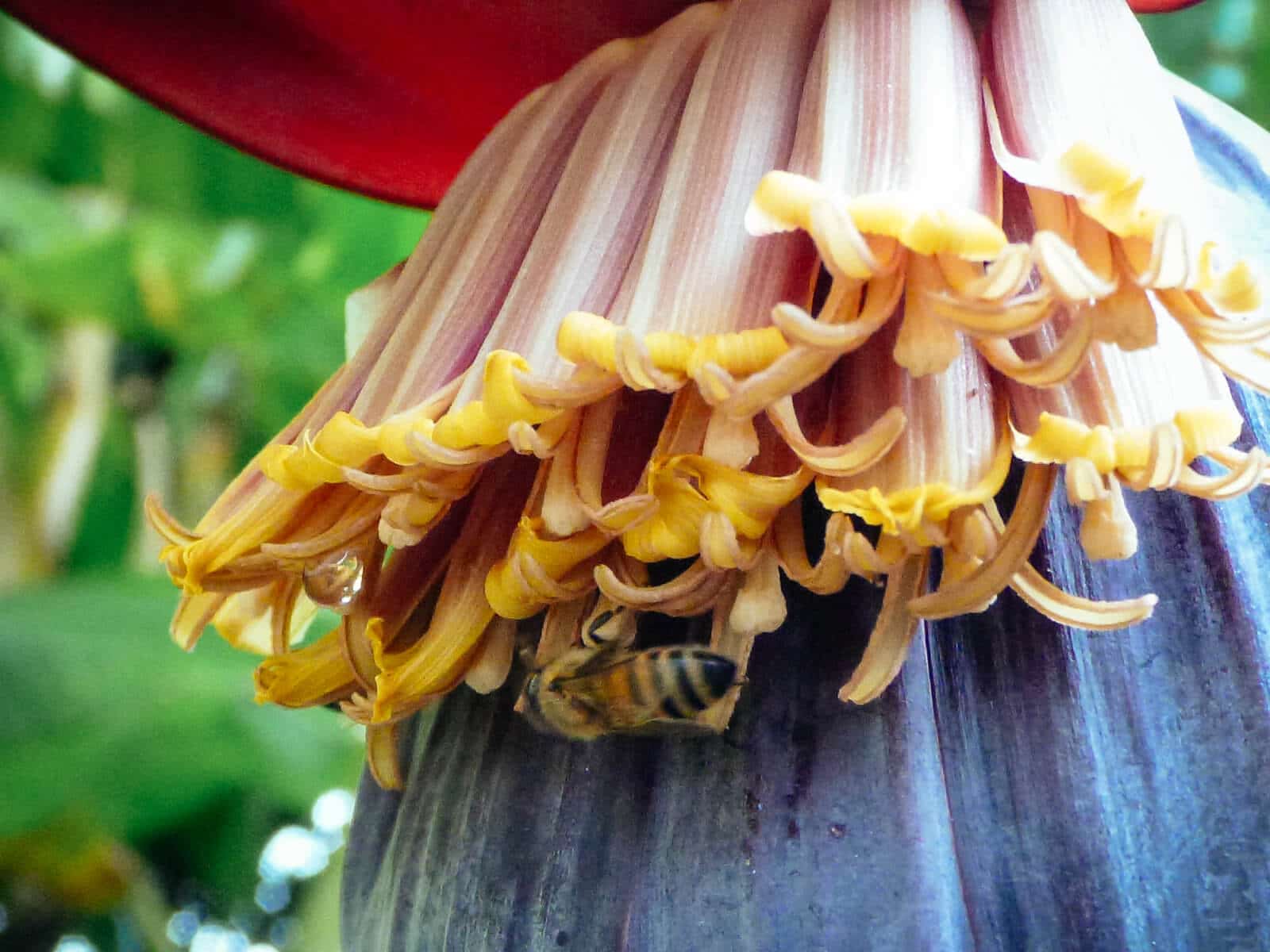
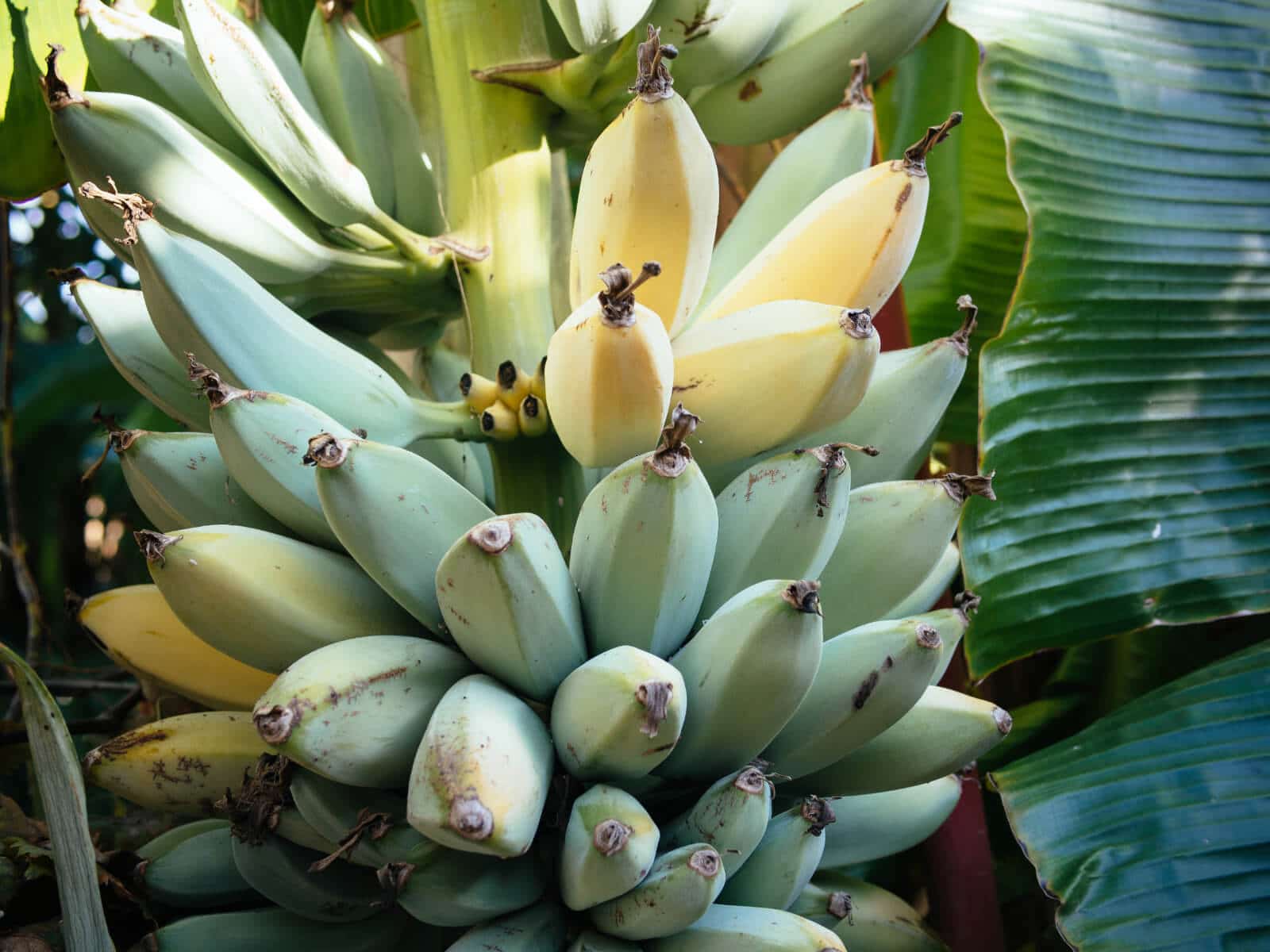
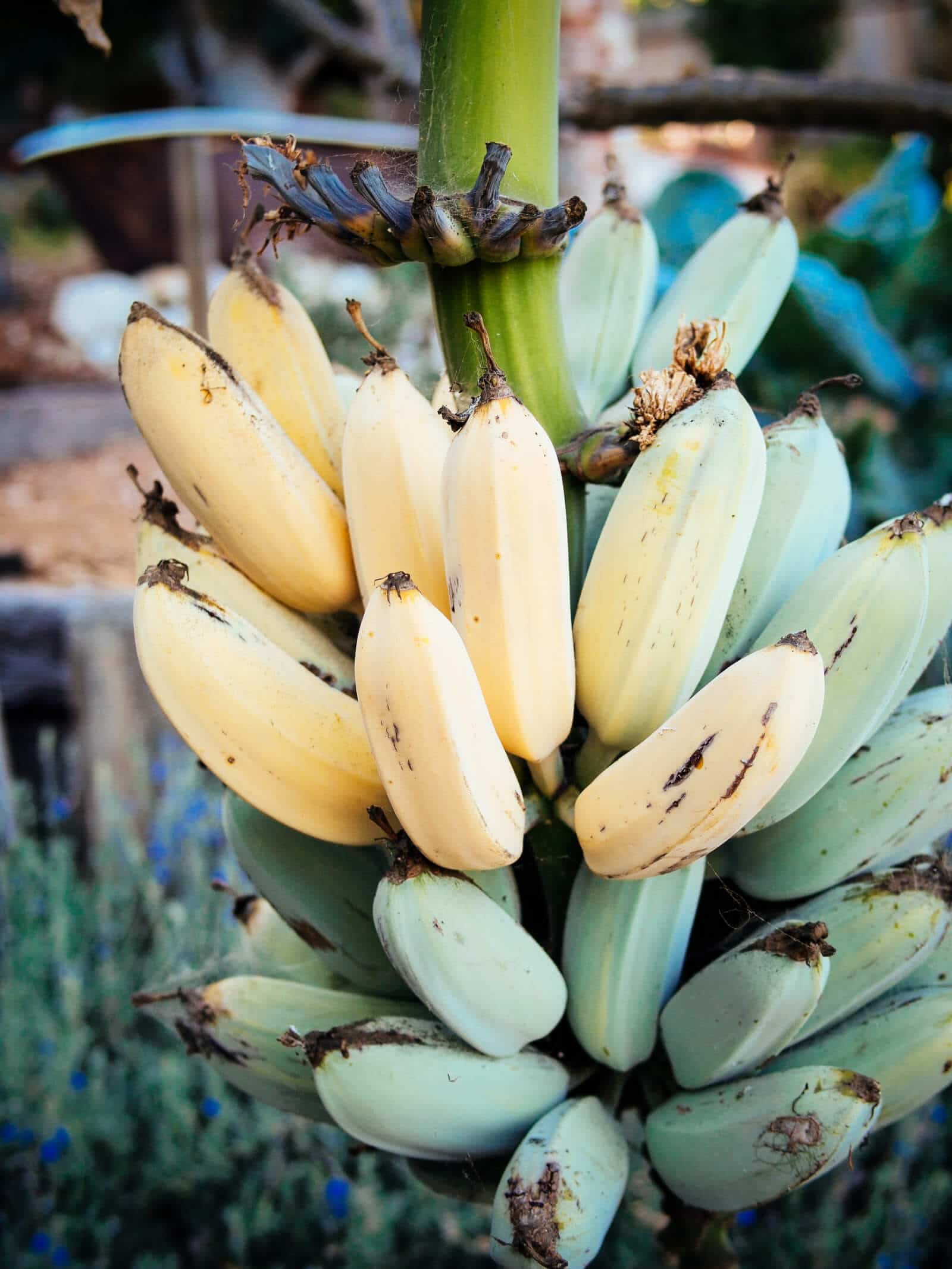
The first several rows to be exposed are female flowers that develop into “hands” (or tiers) of bananas, typically with 12 to 20 bananas making up a hand.
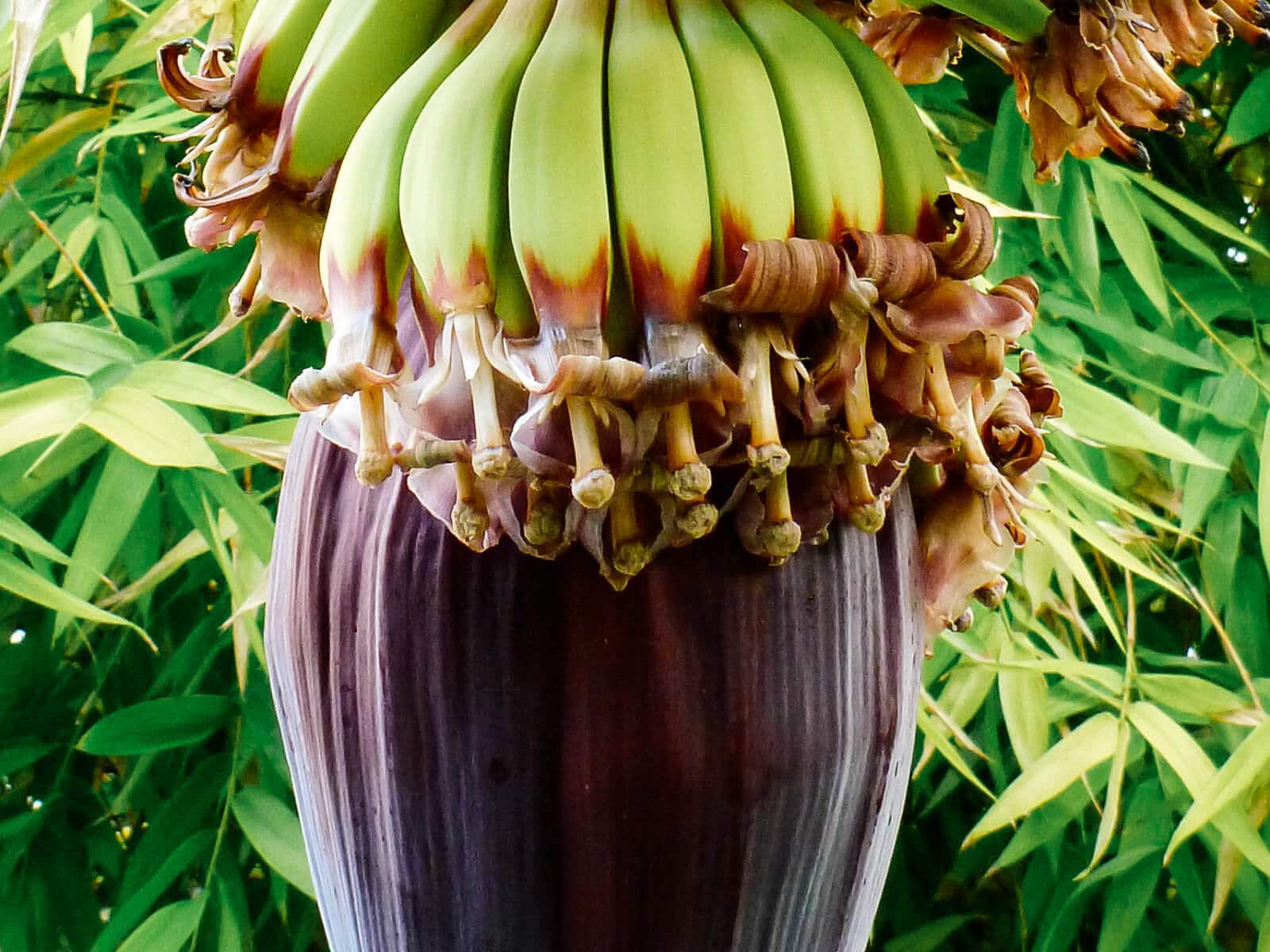
Because the fruit is produced from a single ovary on the flower, a banana is actually classified as a berry, botanically speaking.
So, it’s an herb and a berry… How’s that for confusing?
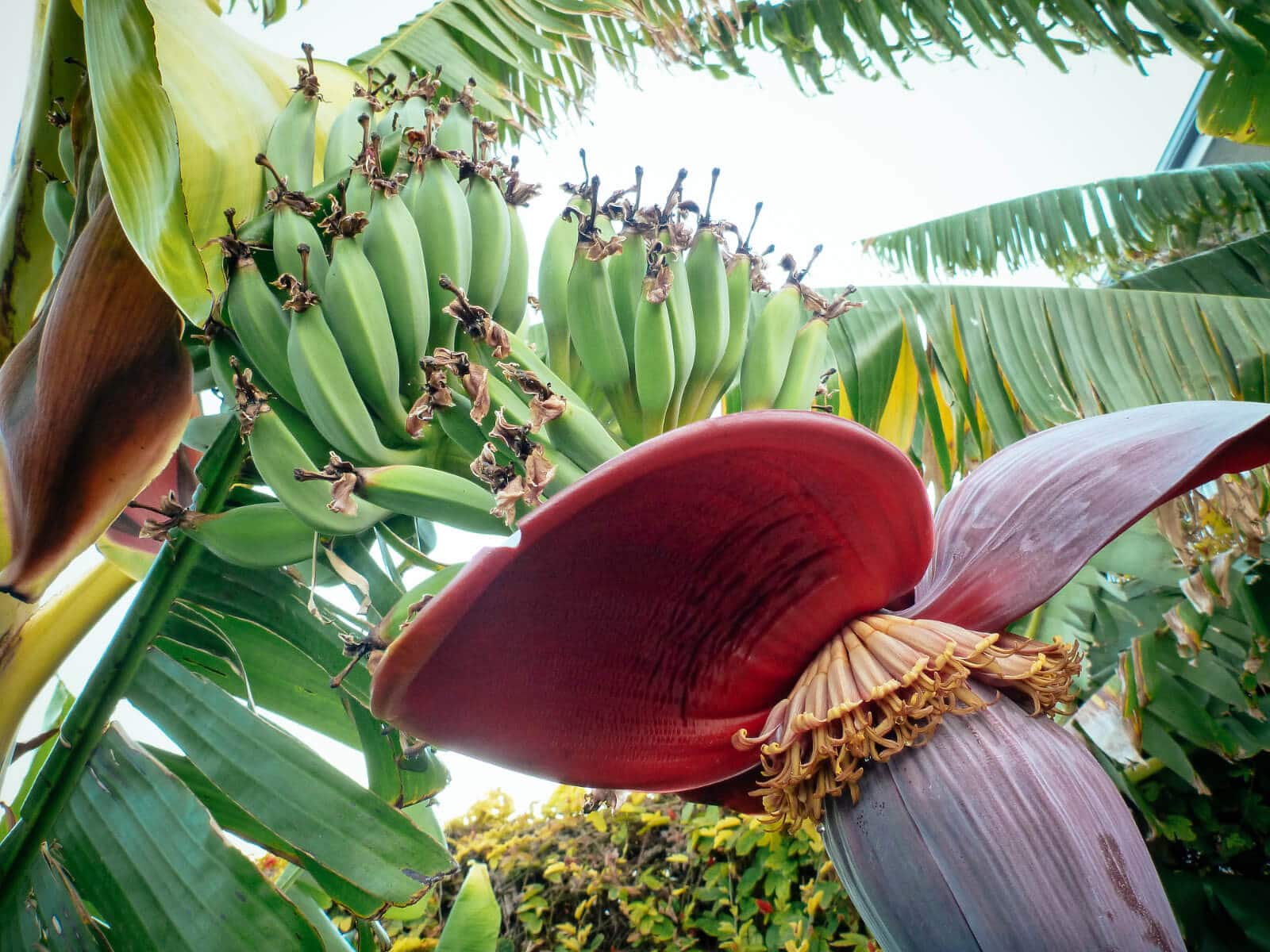
Bizarre botanical fact #3: Banana anatomy was coined by Arab traders.
A hanging cluster of hands on a banana plant is called a bunch, with each bunch holding 7 to 14 hands of bananas.
As you likely guessed, individual bananas on a hand are called fingers.
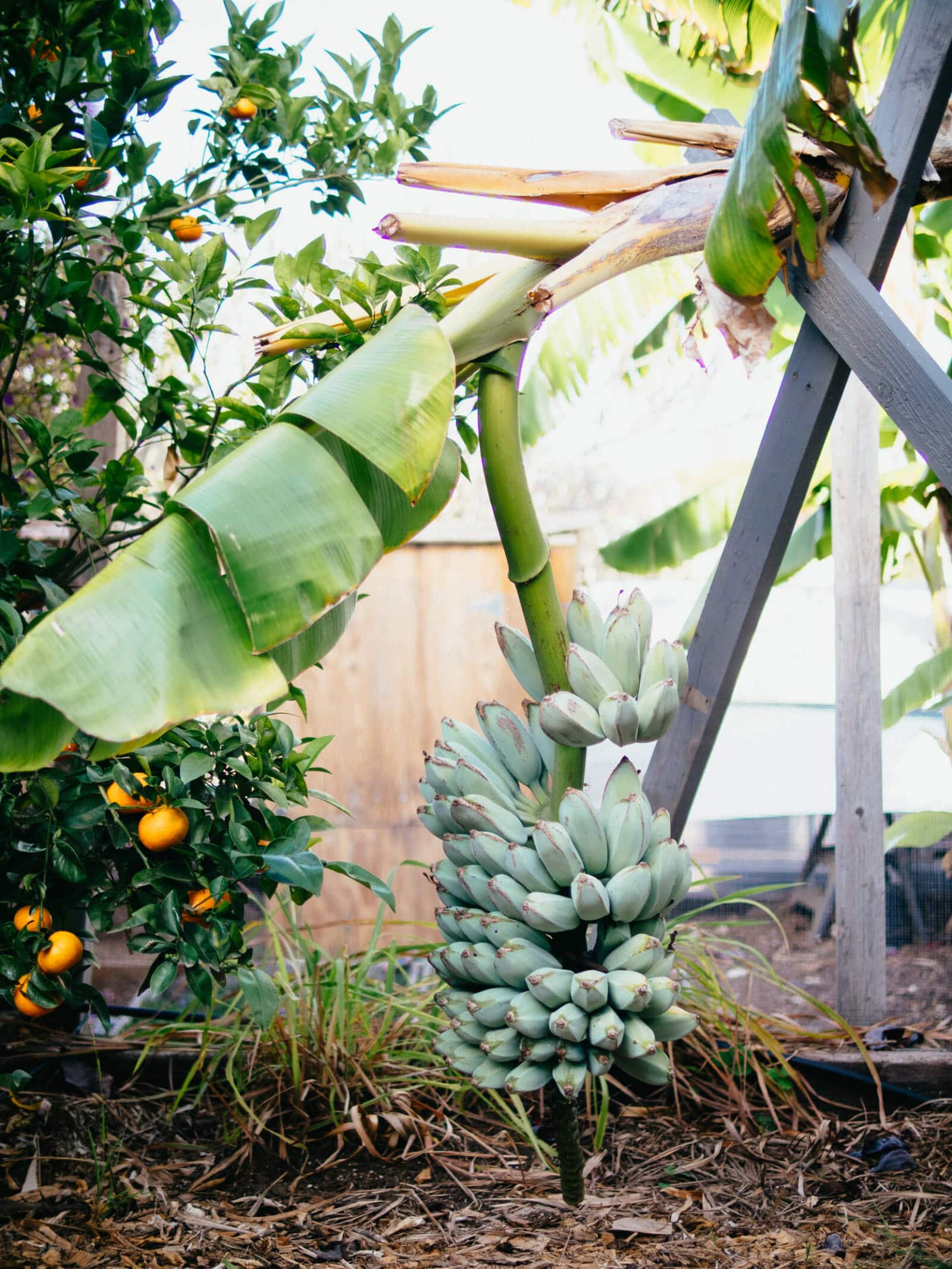
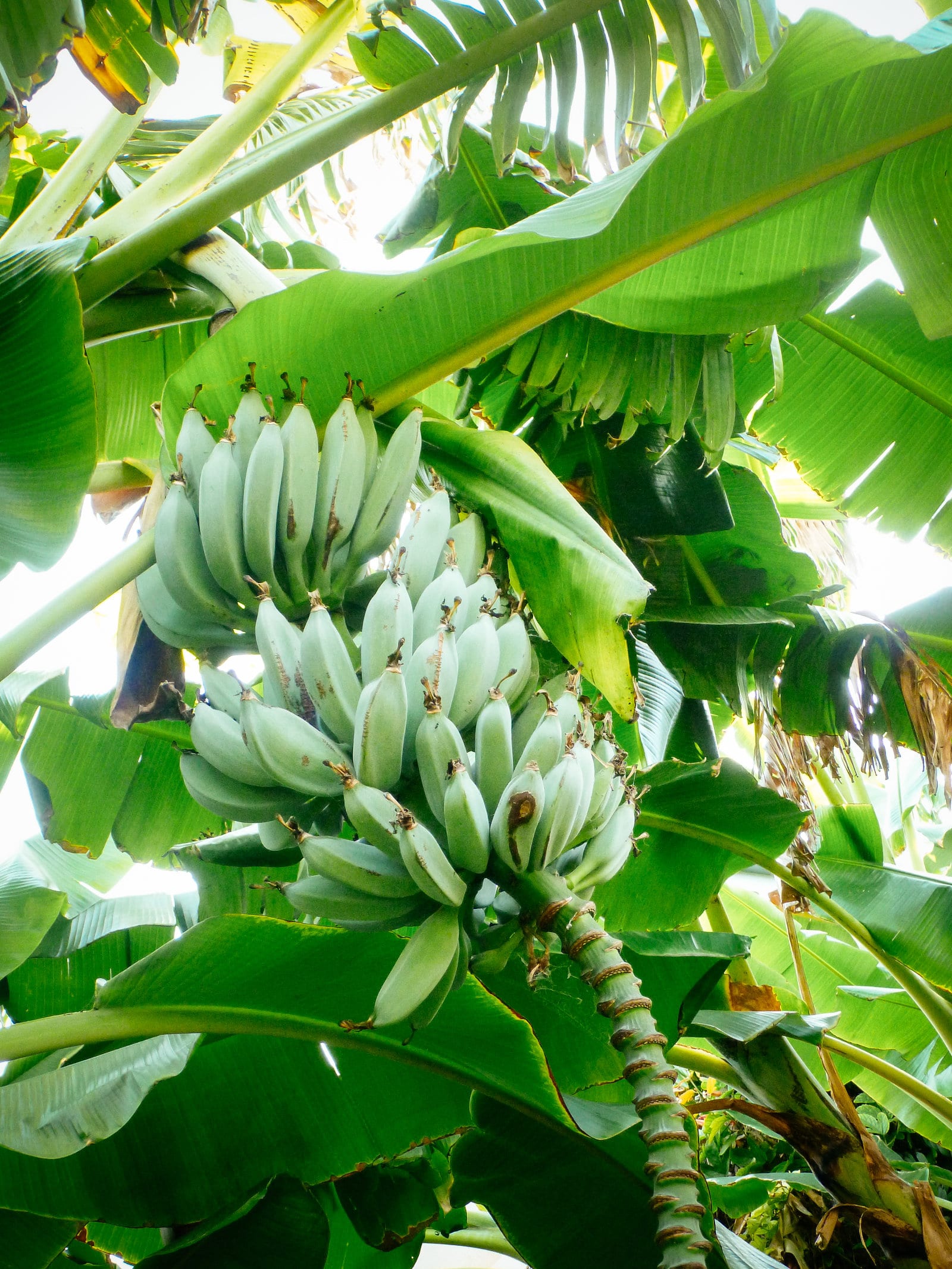
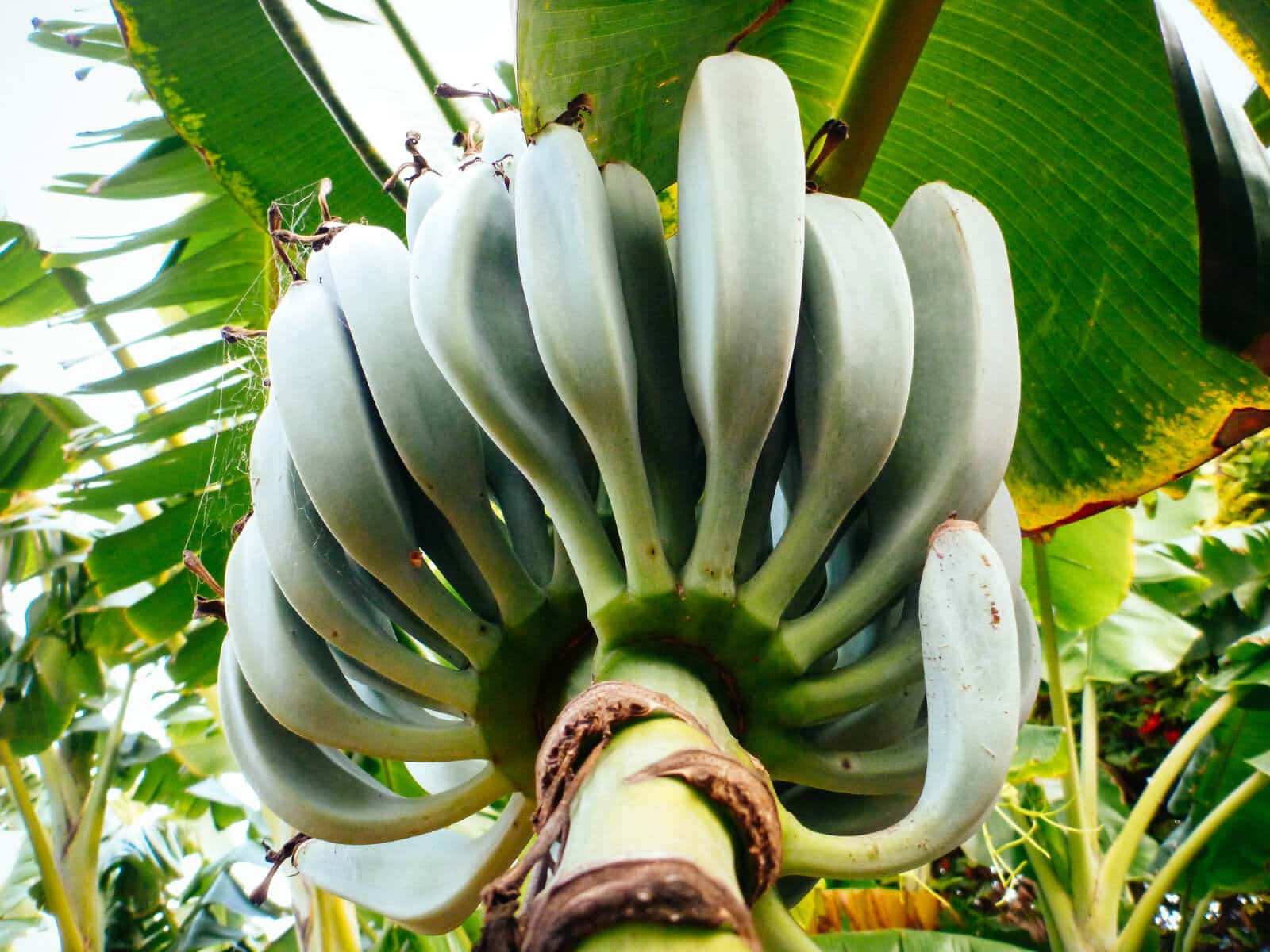
One might think all these terms (bunches, hands, and fingers) were first coined by, you know, the farmers who actually grew them, but in fact, they were named by Arab traders who traded bananas.
After all the female flowers have fruited, they’re followed by rows of sterile flowers that wither and shed in succession, then rows of male flowers that also wither and shed.
Read next: How to pollinate squash by hand if your plants have lots of flowers but no fruits
Layers upon layers of bracts and flowers fall off every day, leaving behind a long, knobby, bare fruit stem called a rachis.
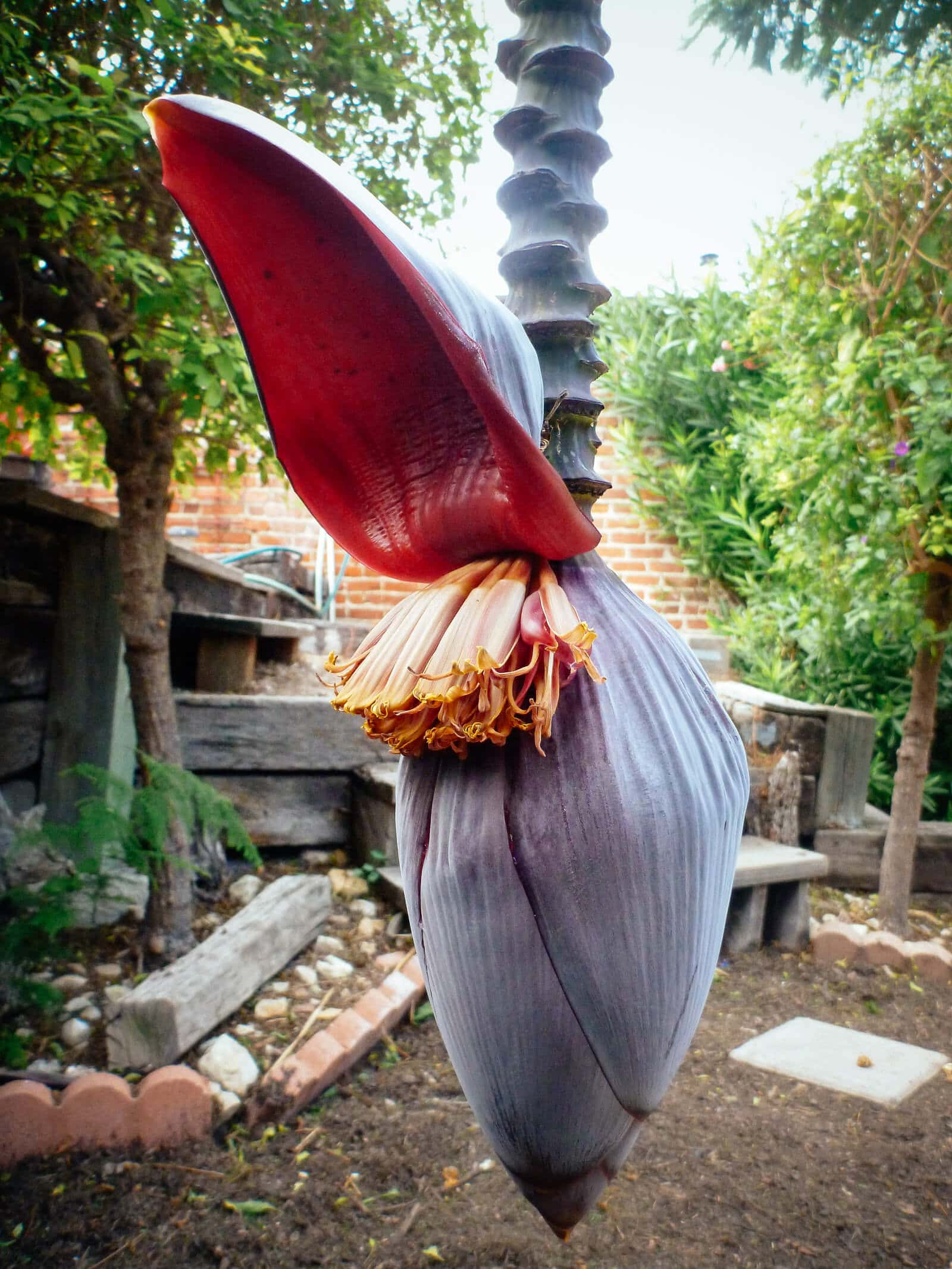
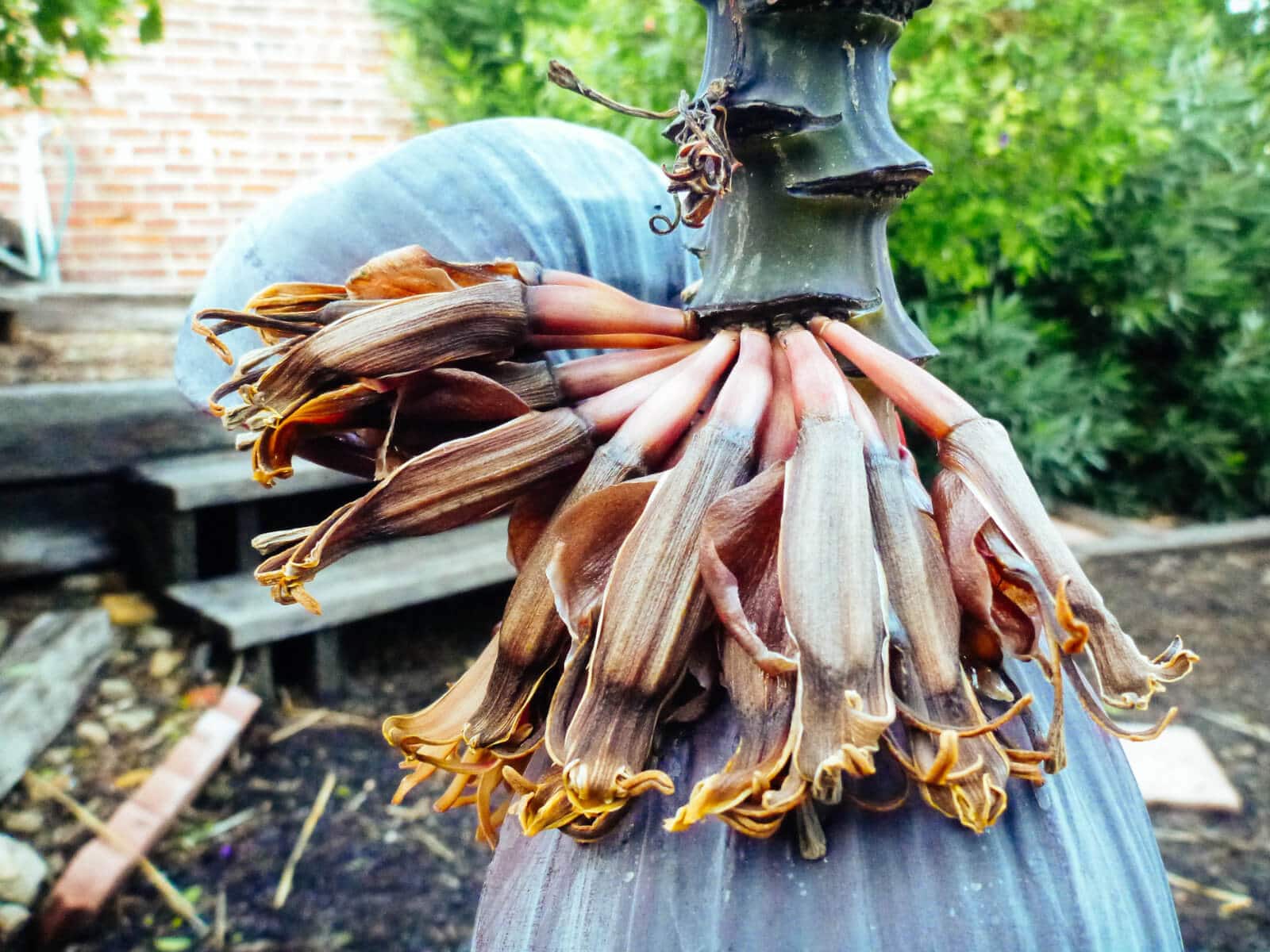
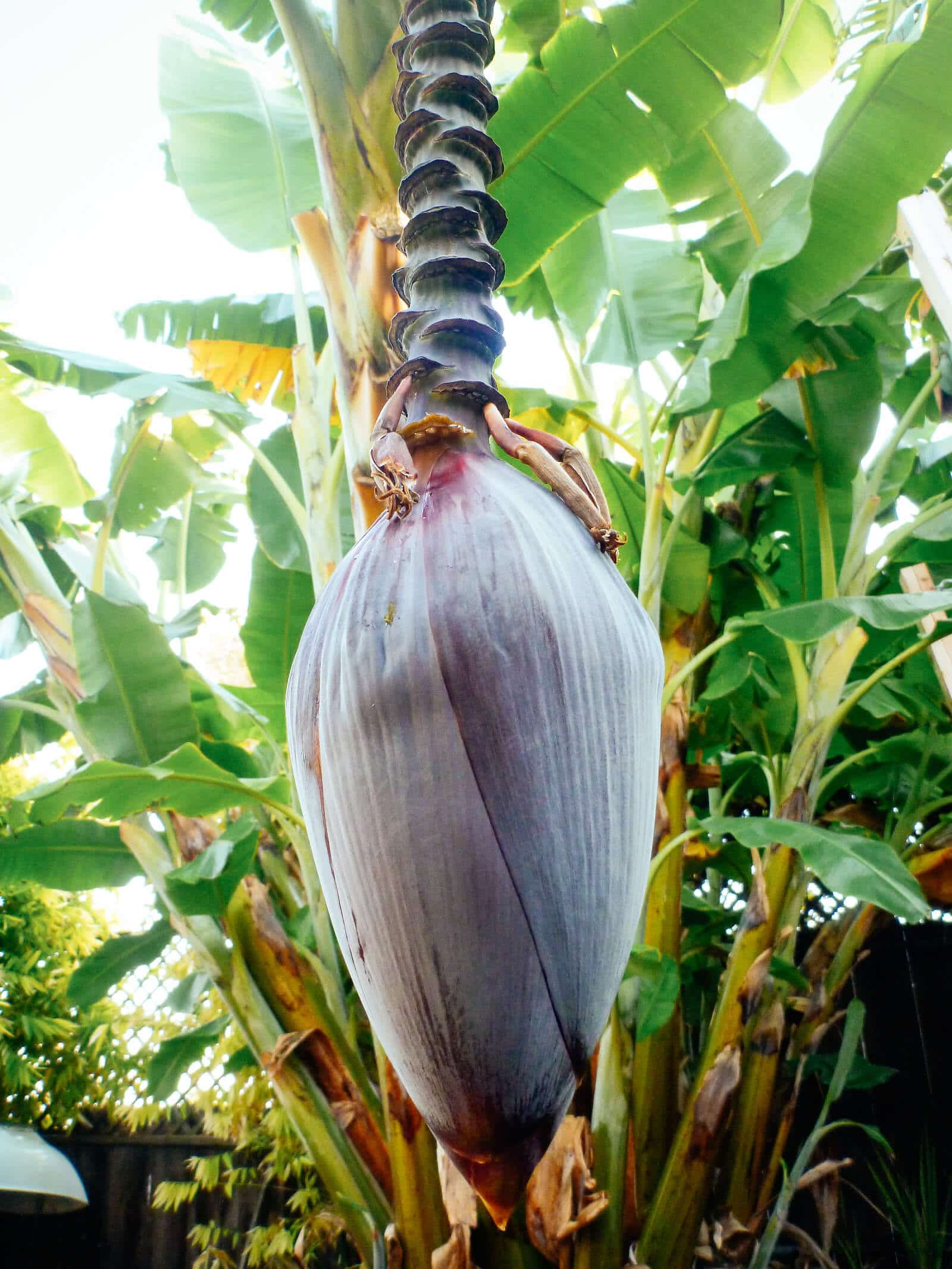
Some people believe that cutting off the rachis after the last hand of bananas will send more energy to the developing fruits.
I’ve tried this several times and eventually just left the rachis on, since I never noticed a difference in the size or quality of my bananas whenever I trimmed the rachis.
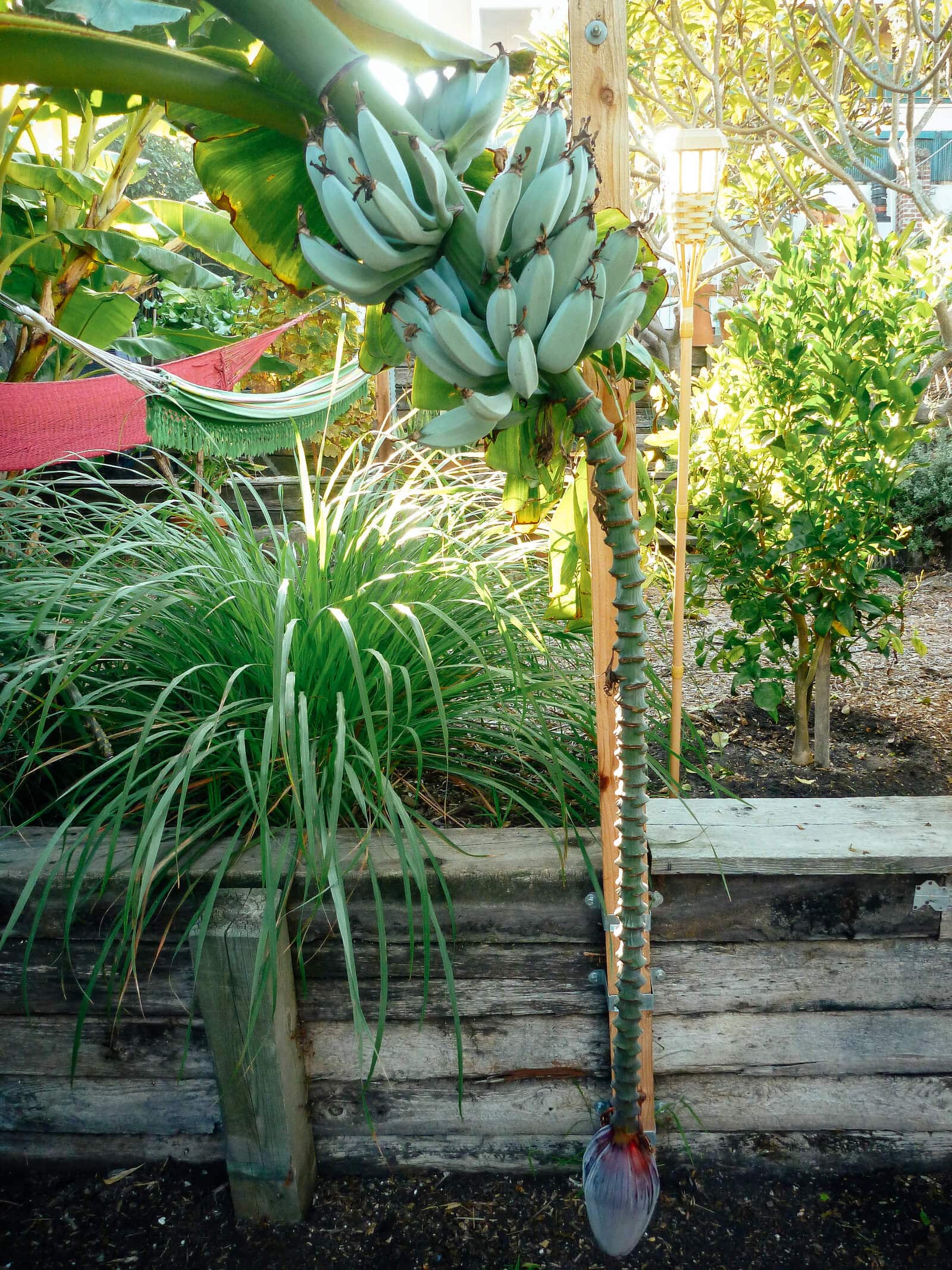
Bizarre botanical fact #4: Modern bananas have been bred to be sterile… but they DID have seeds at one point.
A plant produces a single crop of bananas and then dies, propagated only by new shoots from the corm.
Each of these shoots (pseudostems) goes on to live for only two to three years, but because the corm can survive for many years, the banana plant’s reproductive process is unique for a fruit.
Bananas are bred as parthenocarpic plants and don’t require any pollination to produce fruit.
Disclosure: If you shop from my article or make a purchase through one of my links, I may receive commissions on some of the products I recommend.
There are no seeds, as modern-day cultivated bananas (like the Cavendish variety sold in stores, or the popular Cavendish bananas and ice cream bananas grown in backyards) are sterile. What seeds they used to have are now barely flecks in the flesh.
However, if you’ve ever peeled the fruit (err, berry) of an ornamental pink banana plant (Musa velutina), you may have noticed the flesh was full of big black seeds. Though this pink banana below was found in a rainforest in Panama, it’s actually a cold-tolerant variety. The banana splits and peels when the fruit is ripe.
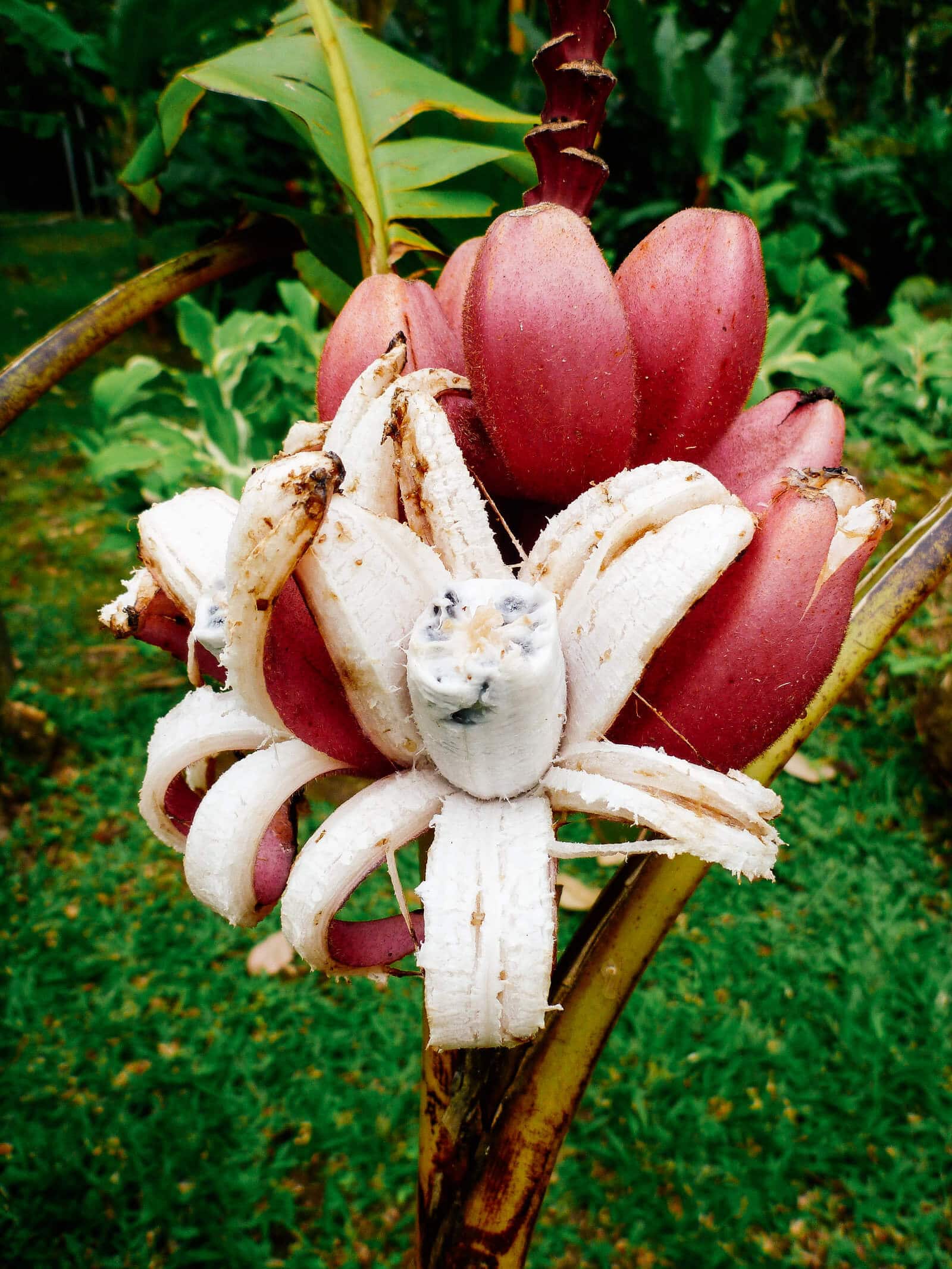
Non-cultivated bananas are all like this, and while ornamental varieties like Musa are still edible, they’re often more work than they’re worth.
In warm climates (USDA zones 10 and higher), banana plants are non-seasonal and fruit year-round.
But! You can still enjoy homegrown bananas if you live in a colder climate.
Cold-tolerant varieties of bananas (I know, that sounds like an oxymoron for a tropical plant) can survive just above freezing, but the pseudostems die to the ground in winter.
Musa velutina (hardy to zone 7b) and Musa basjoo (hardy to zone 5, though it won’t flower when it’s that cold) are two such varieties that will send up new shoots in spring when the weather warms up again, as long as the corm is heavily mulched and protected from cold.
If you don’t want to fuss with them in a short or cold growing season, bananas can be kept as houseplants and may even produce fruit if given ample sun and warmth.
Where to buy
Banana plants
Now that I’m in Central Oregon, I’m entertaining the idea of growing bananas again in my landscape. How fun would that be to have bananas amid my conifers and aspens?
This post updated from an article that originally appeared on December 14, 2011.
Banana recipes you might enjoy:
- Choco Banana Date Cookies (aka Breakfast in a Bite)
- Baked Banana Donuts with Chocolate Hazelnut Glaze





Thanks so much for all this great information about bananas! I had no idea they were herbs
Beatifull all, amazing
Thanks for the interesting article.
Thought you might like to add another term to your explanations.
Background, I live in coastal northern Australia. Bananas are farmed around here in large farms, they grow wild ( escaped not actually native) and everyone, including myself has them growing in our yards.
The new term for you relates to the “baby” plants growing out of the corm. The “official” term in Australia is “Sucker” not pup. I have no idea how it derived. We use the term Pup for just about everything else ( bromeliads, cactus etc) but Bananas get called Suckers!
Just a bit a useless information
I’m using your article as a source for a school project thank you it has great explanation on bananas about what they are.
You’re welcome, I’m glad this was helpful!
I actually really enjoyed this article. Thank you!
You’re welcome! I’m glad you enjoyed it.
Wow! Linda, that was a great explanation of bananas. I live in Nashville. It gets cold here about now. We just had our first hard frost. I went out to the grove and cut down all my banana plants, covered them with wheat straw, followed by a tarp weighted down by the cut trunks. They will be back next year. A good work friend gifted us with a single corm (baby plant) three years ago and that one has multiplied into several more. We had a hand of bananas last year and this year as well (this year we had three stalks develop hands) as well; but the growing season just doesn’t last long enough for the hands to grow and ripen. But the plants grow to about 15-20 feet and are the centerpiece to our back yard and gardens.
Wow, I never thought about bananas surviving a frost. We moved from California to Oregon last year, and brought one of our banana babies with us. It’s currently living indoors as a houseplant. 🙂
Yes, you can put them outdoors when all threat of frost is passed. Let them grow outside if you like…in the ground. You just have to make sure the location is the one you like and won’t disturb. When cold weather arrives just cut them down to the ground. I leave a foot or two of height, cover with wheat straw and a tarp for the winter. It’s really amazing that the plant will sprout in the spring when it gets warm and grow to about 15-20 feet and have babies. The second year plants will put out a rachis and form the fruit hands. Ours has become the center piece of our back yard and gardens. People will come to visit us and get impressed with the raised garden and kiwis on trellis but their eyes always settle on the banana plants. Happy gardening!
How long is your growing season? I’d love to do that with the banana we currently have potted indoors (once we move to a more permanent home).
Linda, we live in Nashville, TN. Zone 6, I believe. I cut the bananas down at first frost, usually sometime late October or early November. I leave the stumps about 1-2 feet tall, cover with wheat straw then a tarp. They will start growing again when the outside temp is over 70 degrees around late March. I don’t dare uncover them though until after April 15. So, let’s say, from May 1 to end of October…6 months. I have read blogs and seen videos of folks in New England a on up into Canada growing bananas outdoors in ground. They too cut them down after first frost and uncover them when chance of frost is over composting the trunks and leaves (the ones they don’t use for grilling fish and such). Hope that helps and you’re having a grand new 2019.
I was eating a banana and when I read the bit about the fruit being produced from an ovary… I’m just not going to eat it anymore. I had heard that bananas were berries and also that they were herbs so I wasn’t sure so thanks for writing this it *cough* helped. lol =)
All fruits are actually mature ovaries LOL!
I didn’t know much about bananas other than the plants themselves are struggling with disease and disappearing. I’m also learning how attractive flowering plants are. Your post is very interesting, I’m sharing with my followers.
Bananas are susceptible to fungal diseases, like many plants are, but they are far from disappearing. There are hundreds of varieties of bananas in the world, but the one that makes the news a lot is the common supermarket cultivar Cavendish, which is at greatest risk of infection because of its lack of genetic biodiversity.
Thank you for sharing my post!
That’s interesting. Never knew that bananas were herbs. Def gotta share that with others.